Kinematic Analysis
Markerless limb tracking that quantifies stride-level gait deficits and recovery after stroke.
Overview
A mouse walks on a motorized wheel while we use DeepLabCut to track its paw coordinates markerlessly, quantifying stroke-induced motor impairment and recovery. Every dot and trail here is drawn by us from the tracked coordinates.
- Track both forelimbs markerlessly with a DeepLabCut pose model.
- Pool paw positions over the walk to reveal the band each limb sweeps through.
- Detect footstrikes and liftoffs to segment individual strides.
- Compare gait from a pre-stroke baseline through post-stroke days 3 and 27.
Tracking Limb Positions
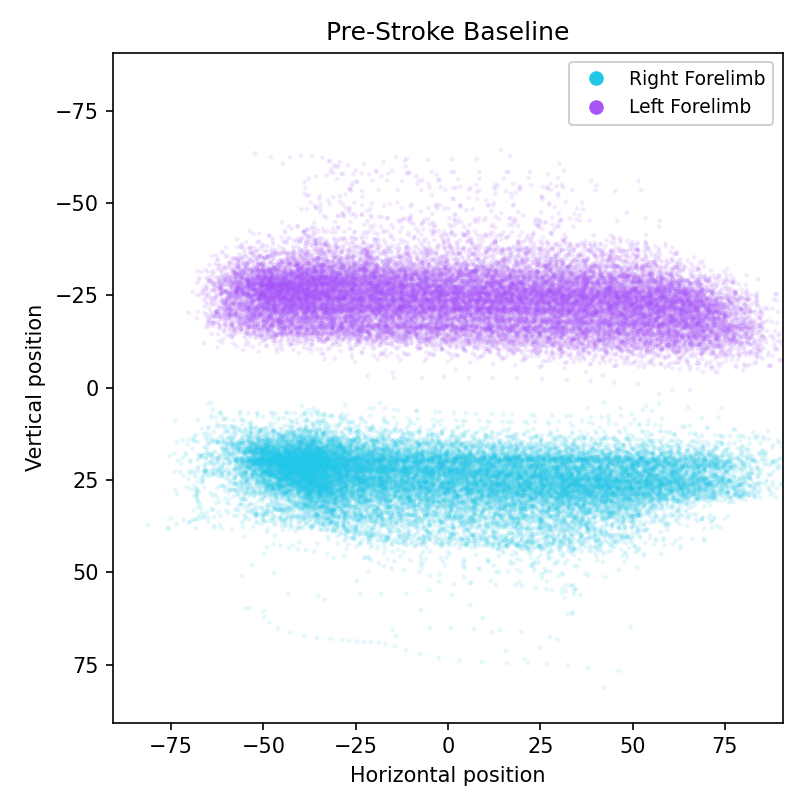
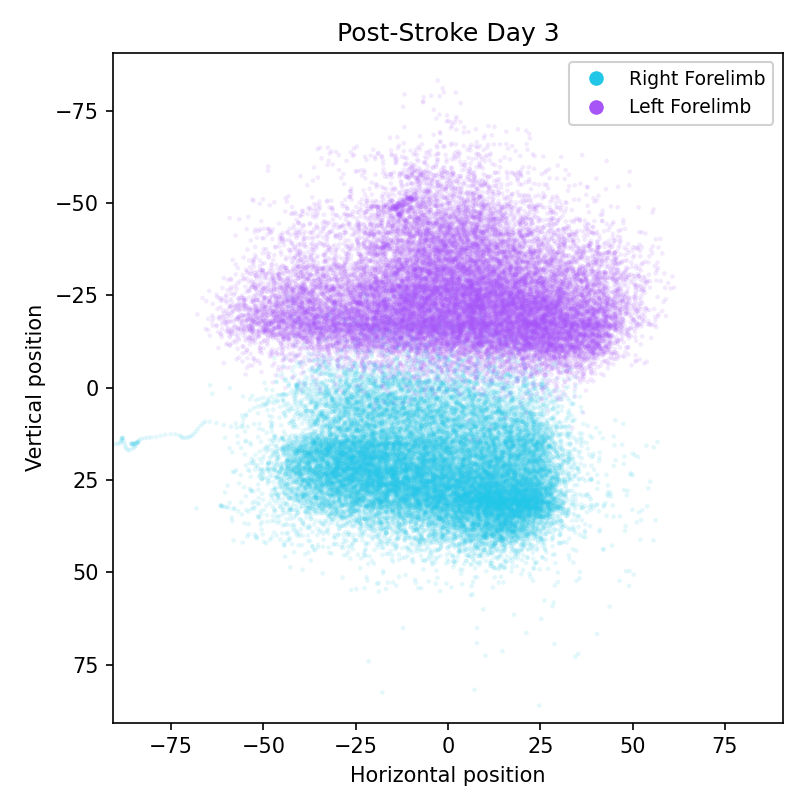
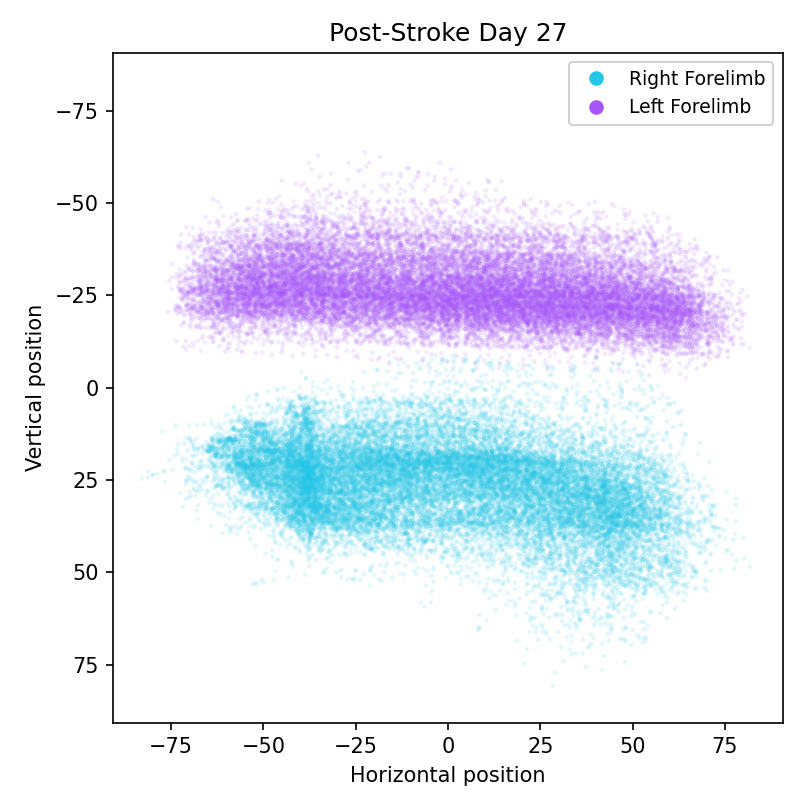
Paw placements are more closely grouped after stroke, with some recovery toward normal paw placement occurring by post-stroke day 27 (though not fully back to baseline).
Stride Analysis
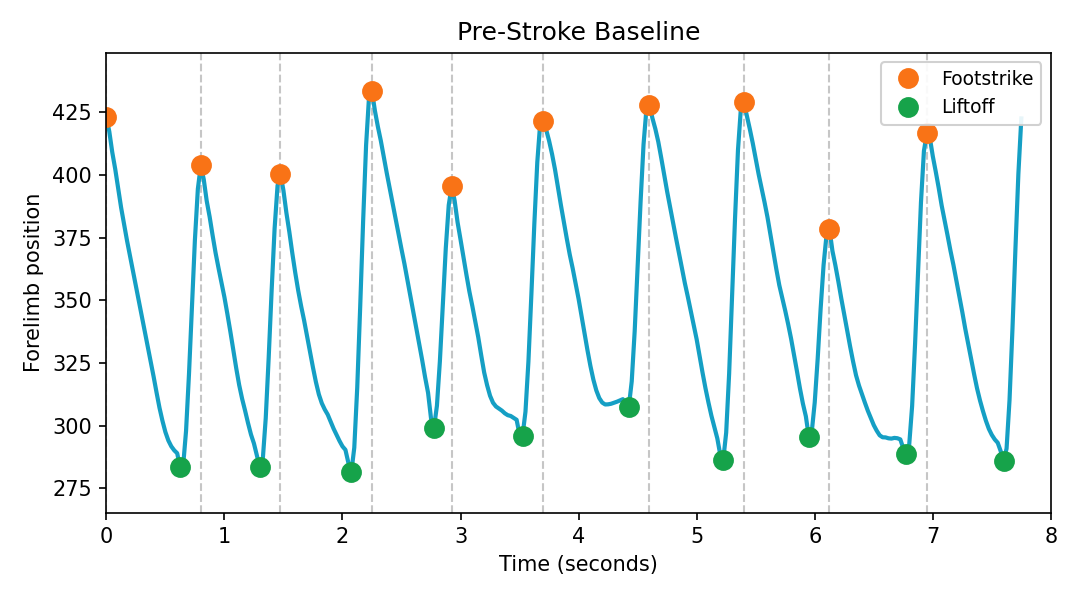
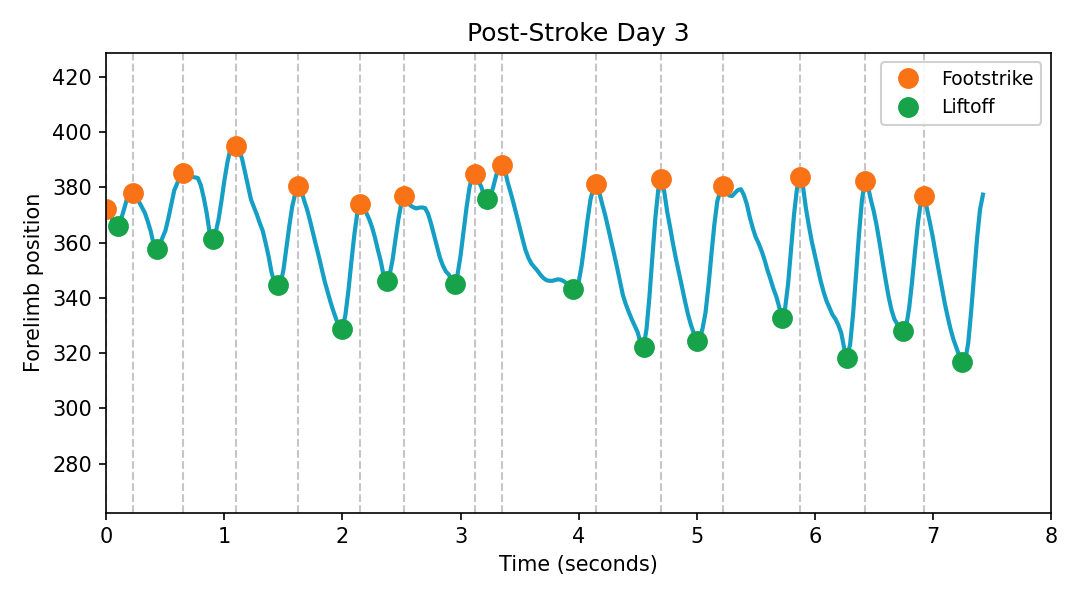
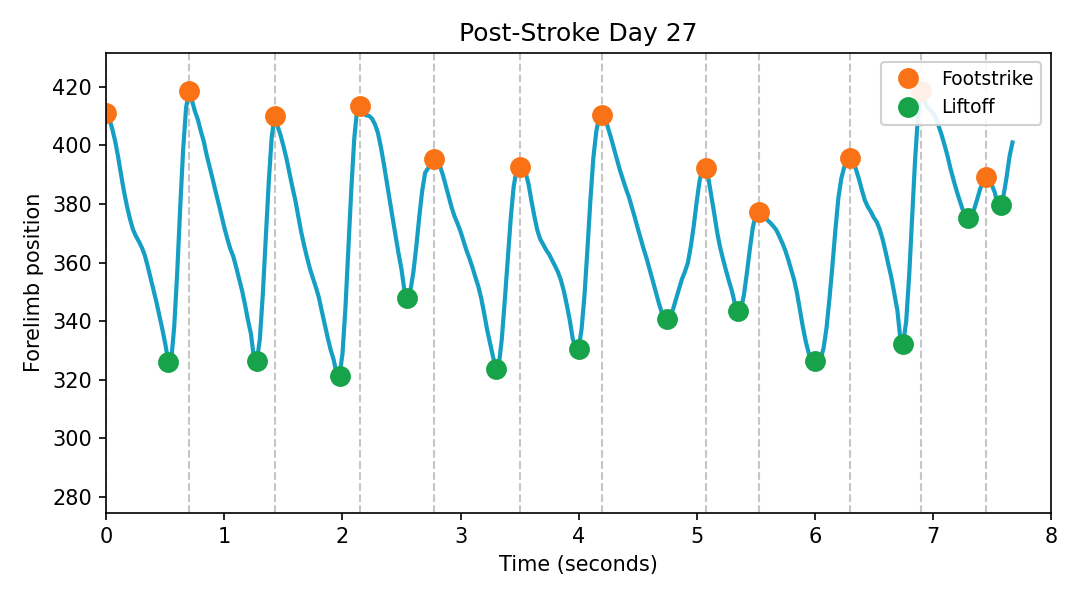
The same right-forelimb trace from pre-stroke baseline through post-stroke days 3 and 27, so the shape and regularity of the step cycle can be compared directly across days. Strides are shorter and more variable after stroke, with some recovery by post-stroke day 27.